

What’s New for the 2026 Nissan Leaf: Exterior Design, Power Unit, and Chassis
Fifteen years ago, the Nissan Leaf introduced Americans to affordable electric vehicle ownership. The new 2026 Leaf will continue this legacy. Arriving later this year, our original electric vehicle will continue to deliver battery-fed performance in a more efficient package.
Larger than the outgoing model, the Leaf starts with a sleeker design. Nissan’s approach is to balance rational and emotional appeal. The exterior design follows this concept with a cleaner front end, an LED lighting signature that takes the best of Nissan design, a fastback-like roofline, flush front door handles with the rear ones mounted on the roof pillar, and a distinctive LED taillight unit.
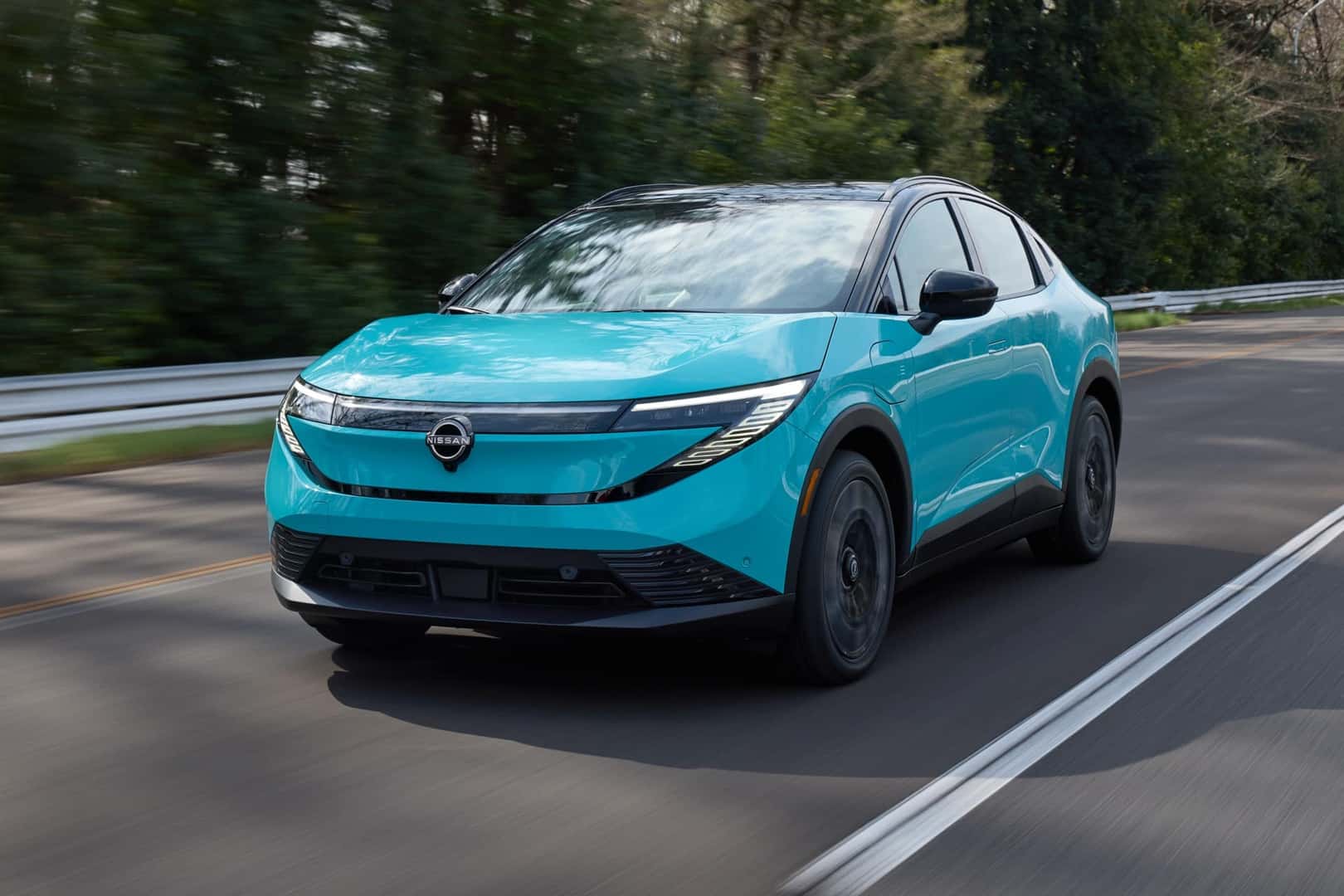
In all, the exterior design is aerodynamic, with a drag coefficient of 0.26. The 2026 Leaf will offer a lower ride height, aerodynamic wheel designs, active grille shutters, and a flat underfloor working towards keeping airflow under control.
Another innovative feature of the 2026 Leaf’s exterior is a fixed panoramic roof. It has an infrared reflective coating that protects occupants inside the 2026 Leaf from the sun. There is no need for a sliding shade to do so. Other glass panels use electrochromic technology that adjusts transparency by a button in order to limit or allow the amount of light coming through.
The 2026 Leaf will be available with a single motor driveline. Nissan is calling the power unit a 3-in-1 motor, combining the drive motor with an inverter and reducer. The drive unit will be rated up to 214 horsepower with 261 pound-feet of torque. In developing the new power unit, Nissan looked to improve noise, vibration, and harshness by targeting a lower sound level compared to the already quiet previous-generation Leaf. In fact, Nissan targeted to lower the noise level by two decibels (based on a 31-mph drive in the city).
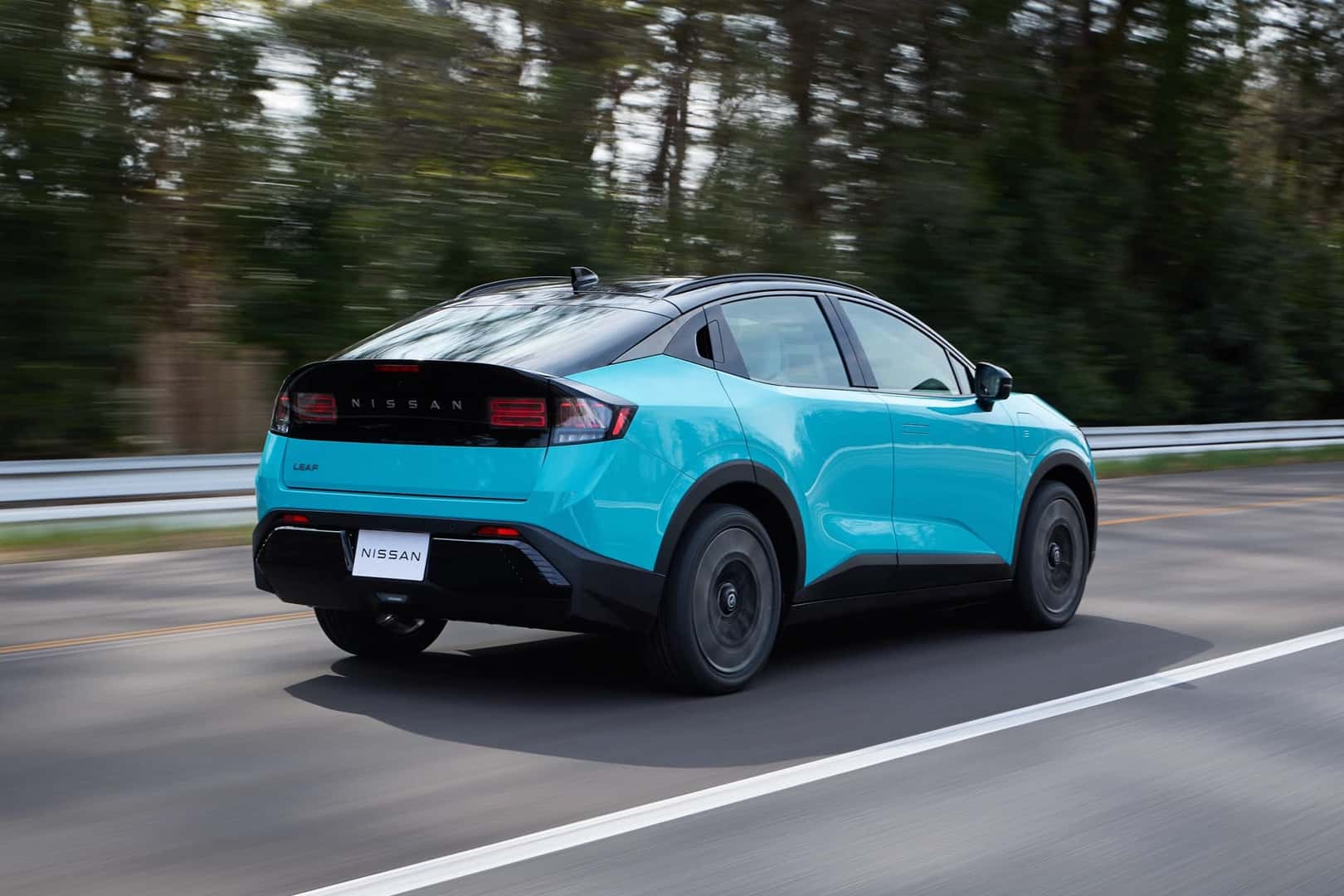
Another improvement that will be found in the 2026 Leaf is the placement of the heating, ventilation and air conditioning (HVAC) unit underneath the hood. By moving it away from the dashboard, it opens up the cabin for more space.
Regarding the rear suspension, Nissan will use a multi-link setup for the 2026 Leaf. In turn, it will yield a 66 percent increase in lateral stiffness. Plus, the turning radius has been calibrated to be 3.94 inches tighter than the outgoing model using an upgraded rack for the electronic power steering system. The immediate benefits of these improvements will be better handling overall.

Battery cooling and heating are among the biggest challenges EVs face for year-round use. The 2026 Leaf will install liquid-cooled batteries with a new thermal recovery system through an On-Board Charger. This will enable the battery to stay warm in cold temperatures, especially in the Upcountry during the wintertime. In turn, this will optimize battery performance with potentially increasing range.
The 2026 Leaf will be a vastly improved EV made for everyday life. At its heart, it is still a practical, family-friendly battery-electric crossover. The 2026 Leaf will arrive at Dick Smith Nissan of Columbia later this year. Contact us to become one of the first owners of this amazing new EV. Plus, every new Leaf gets the Dick Smith Advantage.

0 comment(s) so far on What’s New for the 2026 Nissan Leaf: Exterior Design, Power Unit, and Chassis