

Cargo Packing Tips for Your Next Family Road Trip
Television shows often depict people spontaneously embarking on a road trip. In reality, such trips require extensive planning. You must take time off work, determine how much travel time is acceptable, and decide whether the destination is the sole attraction or if there are sights to see along the way. If this is a route you frequently travel, you might have favorite dining spots and other stops to consider. The last thing you do before leaving is pack the vehicle, which is often the least planned aspect of the trip. Dick Smith Nissan of Columbia offers some potentially helpful packing tips.

The Three Cargo Zones of Vehicle Packing
What you choose to take with you is entirely your decision. Here are a few helpful hints on where everything should go. The first step is something you likely already do informally: dividing your vehicle into zones. Zone 1 is the front seat area, where you want whatever you need while on the road to be easily accessible, including, for example, cellphones, charging cords, drinks, sunglasses, or their cases for when you no longer need them, and so on.
Zone 2 refers to the back seat. Consult with your kids about which items are best to bring along while they are in the back seat. This should certainly include things to engage the kids, as well as a cooler or snack bag. If the weather requires it, coats or jackets should be within reach for both front and back seat occupants in case it turns cold or wet. While you likely do this informally, writing it down in advance can help you organize the vehicle cabin and prevent you from forgetting anything important. Consider all available spaces, including console storage, door panel pockets, and potential space under the seats. Additionally, there should be a designated trash container for the front or back that can be easily emptied, disposed of, and replaced.

Zone 3, of course, is the cargo area. In a sedan, this space is the trunk, which is essentially closed off. In an SUV, crossover, or minivan, the front part of that area is accessible from the cabin, offering an opportunity to utilize it. It is likely an ideal spot for the aforementioned coats and jackets.
The Secrets to Effective Packing the Cargo Area
When packing the cargo area begins, the first order of business is to ensure that no one tosses items into the cargo area on their own and refrains from packing anything until you see everything that will occupy the space. Establish a staging area around the car where all items destined for the cargo area are laid out in front of you. This approach allows you to visualize the full range of sizes and shapes you need to arrange for the most efficient packing. Consider size, weight, and accessibility.
Generally, begin with the largest and heaviest items. Floor space is valuable, so position items vertically if possible. At the same time, watch for nooks and small spaces created by larger items that do not fit perfectly together and could accommodate smaller items in your staging area. Chances are, your cargo items will have similar weight for their size, but if you have something that is exceptionally heavy, try to place it forward and center in the cargo area to avoid stability issues.
Consider Overnight Stay Bags
If your trip involves one or more overnight stays on the way to your destination, consider having a designated travel bag or two filled with everything the entire family needs to get through the drive and hotel stops. That way, instead of having to unload and bring everybody’s bags into the hotel room and repack them the next morning, you might just bring in one with everyone’s clothes and bathroom items needed for the road trip. If you book two hotel rooms, you’ll probably need two bags. Then, make sure these are the easiest items to access and pack around them. If you plan to use a roof rack, these travel bags should be the first items to be considered for the rack since you likely don’t want to leave anything up there overnight.
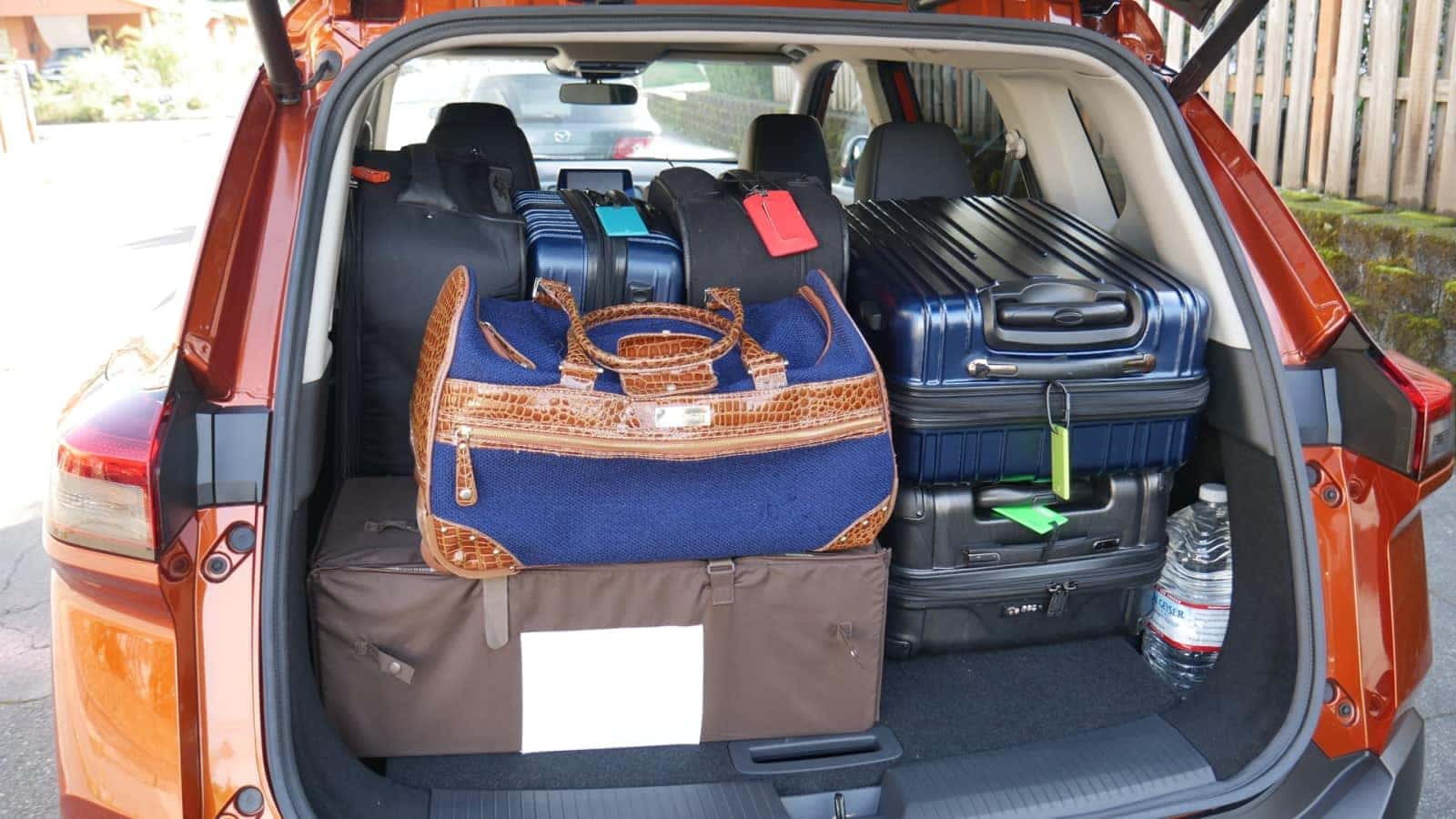
Consider the accessibility of emergency items in your vehicle, such as jumper cables, basic tools, a flashlight, and a first aid kit. Typically, these items are stored under the cargo area floor during regular use. However, when your cargo area is loaded with a couple of hundred pounds of items, this may no longer be an ideal location. Think about relocating them, finding a container for everything, and ensuring they remain reasonably accessible.
Be Careful When Stacking High
If your vehicle is a crossover, SUV, or minivan, you can theoretically pack items up to the ceiling. However, try to leave a tunnel of open air down the middle so you can still use the interior rearview mirror, even if it means packing things higher on either side. That is, of course, unless you have a digital rearview mirror with a rear-facing camera. In that case, you can stack as high as you want with one caveat: you don’t want those items crashing into the back seat and its occupants in the event of an emergency stop. Therefore, try to keep only light, soft items above the rear seatback level or secure them in place.
See Us If You Need More Room
These are just a few basic packing tips to make your road trip more convenient and enjoyable. If you decide that your current ride isn’t up to the task, visit Dick Smith Nissan of Columbia to find a new Nissan SUV or crossover, including the spectacular new Murano. Alternatively, if you are considering a quality used vehicle, we can assist you there as well by offering a Nissan Certified Pre-Owned vehicle that has been thoroughly inspected and provides the over-the-road confidence of a warranty and Roadside Assistance program.

0 comment(s) so far on Cargo Packing Tips for Your Next Family Road Trip